Showing posts with label Gender. Show all posts

Thursday, 2 October 2014

DC Comics, Sexism and Pyjamas: A Reflection

DC COMICS, SEXISM, AND PYJAMAS
By Marie Victoria Robertson


As some of you may know, one of my biggest frustrations related to the younger generation is gendered children’s toys. Every time I think that maybe we’ve done some progress, I walk through a toy store and overhear things like, “No son, those are girl toys. The boy section’s over here” and “I can’t like Transformers, I’m a girl”. I’ve nearly had to be physically restrained to keep from speaking up to the parents. I hate the idea of a baby doll somehow damaging a boy’s psyche just like I hate the idea of a Transformer being a sacred, boys-only thing. On the same note, I’m tired of finding little boys’ clothing with trucks and baseballs on them. When I tried to buy my son a pink shirt a while back, all I could find was frilled and bedazzled stuff I wouldn’t even let a hypothetical daughter wear. Enough already.

A few days ago, the now-infamous “Score! Superman does it again!” and “Training to be Batman’s wife” DC T-shirts made the rounds. I saw them, I scoffed, and filed them under “Wow, comics disempowering its female characters and its female fans, big surprise.” And then I saw Target’s DC baby pajamas: a pink “I only date heroes” and a boyish-gray “Future man of steel”. Come on. I mean, come on.

I get that a marketing department somewhere thought it was a cutesy idea for a girl’s outfit, and I’m willing to grant that maybe they weren’t thinking of the larger implications of this message, but that is exactly the problem. The idea that boys will grow up to the superheroes, and girls will grow up to hopefully marry a superhero, is so ingrained in our societal consciousness that no one gave it a second thought until the shirts and pyjamas hit the shelves. Never minding the fact that the grey pyjamas make no mention of boys in terms of relationships and sexuality, while the pink ones are doing nothing but that. Did I mention the baby pyjamas were meant for a three-month-old?

We need change in the comics industry, but take a look at what we’re doing. These pyjamas and shirts and toys are meant for the kids that are going to grow up to be the future creators, writers, artists, performers, etc. of superhero comics. We’re not even giving them the opportunity to make up their own minds about gender and society and how it all related to superheroes. We’re bombarding them, essentially from birth, with the message that girls are welcome in the comic book world, but only if they marry into it. 

Why aren’t we telling our girls that they can totally grow up to be heroes? Why aren’t we telling our boys that power doesn’t equal masculinity, and that it’s okay to not be strong? If my son wants to grow up to marry Wonder Woman instead of being Superman, that’s just fine by me. Can we just let kids decide what they really like, and what they think is really important, instead of forcing them to repeat our mistakes? 

“But for goodness’ sake!” you might exclaim. “It’s just a kid’s outfit. Chill out. If you don’t like it, don’t buy it.” Sure, and I won’t buy it, but the problem isn’t just with the pyjamas, or the T-shirts, or the next piece of clothing or toy or movie or advertisement that comes out with this same tired message—these are all the result of a mindset that still, in this day and age, encourages boys to grow up into men defined by their strength, and encourages girls to grow up into women defined by their relationships with these ever-so-strong men. A mindset that produces children’s clothing telling girls their value lies in their appearance and their ability to please men. A mindset that slaps pink pyjamas on a three-month-old girl that basically tells her, “You can’t be a hero, but at least you can date one.” 

The issue isn’t that the pink pyjamas exist. It’s that they exist as the only choice for girls. If you’re going to market a T-shirt or a pyjama that showcases who kids are going to grow up to date, at least have it go both ways. Give me Wonder Woman “scoring” Superman. Give me a powder-blue “Training to be Batwoman’s Husband” pyjama, ideally next to a pink “Training to be a superheroine” shirt. 

And even better, put them next to “Training to be Batman’s Husband/Batwoman’s Wife.”  


Marie Victoria Robertson is a published speculative fiction writer and playwright, as well as the board president of Jer’s Vision: Canada’s Youth Diversity Initiative (www.jersvision.org). When all the other girls wanted to marry Johnny Depp, she wanted to run away with Worf on the Enterprise. She enjoys giant robots, time-travel paradoxes, and forcing her son to watch Futurama.

Tuesday, 9 September 2014

Bikinis and Balancing Acts

BIKINIS AND BALANCING ACTS
By Jordan Danger


When I was a kid, I loved Hallowe’en. I grew up in a super geeky household, and costumes were a big deal. Mom made most of our costumes from scratch; later, when my brother and I got into specific genres, this task became a family effort. My brother was Mr Fantastic one year, complete with elongated arms that required an assistant for candy-carrying; I was Rogue one year, and hand-painted my own white streak into my wig; my favourite was probably the year I went as a Bjorn priestess, when my mom sewed my robes and Dad carefully constructed my nose ridges from theatre putty. 

What I’m saying is, back in my day, cosplay was about accuracy. It was about painstaking work. It was about authenticity. It wasn’t about skin and sucking on my fingers for the camera.

WHERE DO BIKINIS COME IN?

So when I look at a lineup of special guests for a comic convention, I feel really frustrated when I see some of the female cosplay guests of honour. I keep wondering how it is that a bikini with an Ark Reactor in the cleavage can be considered a cosplay—nay, a cosplay worthy of being featured as a guest speaker. 

I have friends who slave over their costumes. They spend hours and big money building a costume that is screen- or book-accurate. Yet somehow, these aren’t the girls featured as guests of honour at the cons. 

There’s been a lot of talk in recent months about ‘booth babes’ at cons, and the general exploitation of women’s bodies as marketing tools for conventions. How can we be mad at con vendors for bringing hot ladies to their booths if we encourage and condone the organizers bringing in bikini-versions of Wolverine or Harley Quinn?

HYPOCRISY AND DOUBLE STANDARDS?

So one side of the equation is this: a lot of people have been up in arms about the way women are portrayed in comic books. The recent debacle with the Spiderwoman alternate cover is a great example. Not only were people furious that this heroine was posed in a way that was perceived to be sexual, they also freaked out about anatomical impossibilities in the pose. If we hold a drawing to these incredibly high standards—“Don’t show me women being overly sexualized and be accurate with your proportions, too!”—then why do we not speak up more about the bikini cosplayers that convention organizers spotlight? Bikinis aside, even the posing that female cosplayers often do reflect the comic book drawings that are most offensive: arched backs, winking eyes, and very little fist-punching. It’s like the real-life ‘opposite day’ of the Hawkeye Initiative

A FINE LINE: THE OTHER SIDE OF THE EQUATION

After San Diego Comiccon, a post by the Associated Press really got my goat. The article ranted about women walking around in belly shirts, and demanded that some modicum of modesty be expected at cons. The thing about this article that really peeved me off was that it seemed to imply that the only place you’d see scantily-clad women was at a comiccon…as if the con culture itself promoted attendees wearing belly shirts. As a woman who has attended many cons, I can tell you that I personally have never ever felt like I was being pressured to dress ‘sexy’ for a day of lineups and impulse purchases. 

But aside from this, there’s another issue here: a woman’s right to wear whatever the Hell she wants. Big or small, black or white, human or cylon, I have always supported a woman’s right to wear whatever insanely revealing clothing she desires—provided of course that she has made this choice consciously, for her own reasons, and with an awareness of the cultural context in which she lives. So I do support a girl’s right to wear a belly shirt, or an Iron Man bikini, or sweat pants and a Pokemon hoodie. 

BRINGING THESE TWO SIDES TOGETHER?

Is there any way to find a balance here? Can I love supporting a woman’s right to wear something skimpy, while also refusing to support the VIP’ing of female ‘cosplayers’ who just wear a colourful bikini? I don’t know. We want to hear your thoughts, though, in the comments below. Do you think there’s something intrinsically hypocritical about demanding less sexualized comic books while prioritizing skimpy versions of cosplay as con guests of honor? Where is the line between a woman’s right to wear what she likes, and a woman’s responsibility to stop feeding into the hyper-sexualization of the geek girl world?


I’ve got no answers for you here. Maybe you’ve got some for me.

Jordan Danger is a veteran blogger, writer, and marketing consultant based in Ottawa, Ontario. She is also President and Editor in Chief of CapitalGeekGirls.com. Jordan blogs at GirlCrafted.com, a lifestyle blog about crafting life both literally and figuratively. She loves DIY projects, her dog, and Oxford comma

Monday, 30 June 2014

Dear Bronies: An Open Letter to My Little Pony Fandom

DEAR BRONIES: AN OPEN LETTER TO MY LITTLE PONY FANDOM
By Mj Baker


     I was browsing around on Netflix last night looking for a new documentary and “Bronies: The Extremely Unexpected Adult Fans of My Little Pony” turned up as a suggestion for me from the Netflix Wizards. My initial reaction was a snort and an eye roll. I’m going to be honest; like many others, I have definitely participated in the joking about Bronies and their deep love of My Little Pony (henceforth referred to as MLP) fandom. After the eye-roll though, I realized that when all was said and done; I honestly didn’t know anything really about MLP or the Bronies. How could I in good conscience make the jokes then? The answer to that was that I just can’t. I don’t want to be that person. I hit ‘Play’ and you know what? I am so glad that I did!
     I realized that Bronies are no different than any other fan base for anything else. That should be obvious right? I feel ashamed that I hadn’t thought about it like that before. Being a geek and having some cos-play good times myself, how could I not realize this? I hadn’t given it any thought and was quick to judge. As I watched the documentary and saw so many young men being interviewed said  they felt like they had to hide it from their parents. They were scared to tell their family, they were scared of getting beat up by other guys, they were scared what their friends would think. As a queer individual I was shocked by hearing such familiar sentiments. I had just never given it any thought. Seeing all of the Bronies at BronyCon just made me smile and my heart happy. They were in a safe space where they all had something in common, which was how I felt when I went to my first Pride parade and it’s how I feel whenever I go to a ComicCon.
Pictured: Menaces to Society and Gender Roles
 I also hadn’t thought about how terrible it is that we are faulting boys for liking ‘girl’ things! I mean seriously, the show is called ‘My Little Pony: Friendship is Magic’ and promotes the values of generosity, kindness, loyalty, honesty and laughter. How could we not want to encourage these things in everyone!! Some make the argument that Bronies  are creepy/perverts/weirdies and turn MLP into something dirty. You know what? There will always be some who do that with anything. Rule 34 and all that. Why paint everyone with the same brush? Some argue that the shows target age is for kids, and I reject that. I never get tired of watching Sponge Bob and Bugs Bunny. Has the world forgotten that The Transformers was a kids cartoon? Teenage Mutant Ninja Turtles? Maybe the lesson is that if Michael Bay reboots it, grow-ups can like it too. If you want to see some of the ‘creepy/perverts/weirdies’ that make up Bronies then I encourage you punch “Bronie fundraising” into your Google machine. The Bronies have done an incredible amount of fundraising for a wide variety of causes including sick children, international aid, and setting up a permanent scholarship fund at CalArts for aspiring animators
Those Inhumane Beasts!
I guess ultimately what I want to say to all the Bronies out there, I’m sorry. I’m sorry I judged you when I had no understanding about you or MLP. I was completely wrong and I see that now. I’m currently watching an episode of MLP while I write this and you know what? You guys are right! This show is awesome! It’s not even a guilty pleasure because a guilty pleasure is something you feel bad for liking and I don’t. Not one bit. I think maybe MLP has actually made me about 20% cooler.

MJ Baker is a baker (no lie); she owns Bake It So! Bakery, a custom-order bakeshop in Ottawa. She is also a lifelong geek, first and foremost a fanatical Star Wars fan. Her head holds more geek and science trivia than Wikipedia. MJ is the co-star of Capital Geek Girls' YouTube show, 'Two Girls Talking'. She loves fireflies, coffee, and books of all sorts.

Monday, 9 June 2014

Guest Post: Hollaback! Ottawa and #YesAllWomen

#YESALLWOMEN
by Julie S. Lalonde

2014 has proven to be a really important year for folks dedicated to ending violence against women in Ottawa. Unfortunately, it’s taken a series of tragedies for much needed conversations to happen. From the threats of rape thrown at the University of Ottawa student president  to the arrest of a much-sought-after “serial rapist” haunting women across the city, residents have had to face the facts that Ottawa’s reputation of being a safe city really depends on who you ask.
 The reality of gender based violence came to a head with a recent horrific shooting in California. When it became clear that the shooter was motivated, in large part, by his misogyny, feminists took to social media to remind folks that #NotAllMen commit violence against women but #YesAllWomen are affected by it.
As an organization dedicated to ending gender-based violence in public space, we were moved by the amount of stories on the #YesAllWomen hashtag that related specifically to street harassment.  For many women and queer-folks, street harassment is a rite of passage; a daily reminder of their gender and gender presentation.
Yet the most common negative response we get to our work is the idea that we should just relax because it’s not harassment; it’s a compliment! Those men who are making you feel uncomfortable in public space are just trying to brighten your day, honey! 

Street harassment isn’t about “flattery”. We know that because we’ve read far too many stories of women who’ve refused someone’s “compliment” only to be told “Fine, bitch. You weren’t that hot anyway”.  
Not to mention the amount of street harassers who skip trying to be play nice and head straight for the insults, the homophobia, transphobia, racism, ableism, etc. 
Street harassment is about maintaining the status quo. It’s a reminder to women and queer folks that public space doesn’t belong to them and that by leaving the house, they’re “asking” for scrutiny. 
Sadly, the reminder that “This space is not for you” isn’t unique to streets. 

This past May, we attended our first ever ComicCon where we hosted two panels on the issue of harassment at Cons and in particular, the notion that Cosplay =/= Consent.
Both our panels were well attended and more importantly, generated lots of important conversations about the reality of harassment in Geek spaces and the fallacy that all geeks are in this thing together. We wish Geek spaces were this amazing kumbaya environment but our presence at the Con and the very existence of the Capital Geek Girls is proof that sadly, that isn’t the case. 


As #YesAllWomen trended around the world, people got a tiny glimpse into the ugliness of misogyny. It was an important, albeit rare, opportunity to shed light in dark places. But unless we insist on continuing the dialogue in every space of our lives, these conversations will be relegated to the occasional headline. We can’t let that happen. There’s too much at stake. 

Julie S. Lalonde is the director of Hollaback! Ottawa, the local chapter of an international movement dedicated to ending street harassment. 

Sunday, 8 June 2014

Great Geek Girls: Meet Hollaback! Ottawa

ALL ABOUT HOLLABACK! OTTAWA
By Marie Victoria Roberston
If you were at Ottawa Comic Con this past May, hopefully you had time to attend Hollaback! Ottawa’s excellent panel, “Cosplay =/= Consent.” The panel opened up a discussion on the grim reality of harassment at conventions and how con-goers can help put a stop to it. 
Hollaback! Ottawa’s work is not limited to conventions. Hollaback! Ottawa is the local chapter of an international movement dedicated to ending street harassment. They define street harassment as gender-based violence in public space. Julie Lalonde, the founder of Hollaback! Ottawa, was already dedicated to doing anti-sexual violence work in Ottawa when she decided Ottawa needed a Hollaback! chapter of its own. As the only organization in Ottawa dedicated solely to ending gender-based harassment, Hollaback! has been able to address issues that otherwise go unchallenged. Hollaback! was able to call out Ottawa Police's victim blaming statements in the fall regarding the 'serial rapist' and was able to have really productive conversations about cosplay and consent at Ottawa Comic Con.
In the geek world, it’s hard to think of your favourite fandoms and conventions as having problems with harassment. We get understandably defensive. In the same vein, it’s hard to think of your home city as having problems with street harassment. Because we here in Ottawa pride ourselves on being ‘quiet’ and ‘boring’, says Julie, we have a hard time believing harassment happens here—at least until it happens to us. Nearly all of my friends have had slurs or crude sexual comments directed at them at least once. I’ve personally been hollered at from passing cars too many times to count. 
Julie tells of an unfortunate experience that happened to her in summer of 2011: while riding on the bus toward downtown, she was physically and sexually assaulted by another passenger. As if it weren’t bad enough that a stranger felt entitled to violate a woman on the bus, not a single passenger was willing or able to help out. No one alerted the driver, no one stood up to say “Come on, stop” or “I’m calling the police”. This kind of inaction is problematic and can even be deadly. 
The good news is that taking action does make a difference! In the 3 years Hollaback! Ottawa has been active, some positive changes have been made: the Ottawa Police responded positively to concerns about victim-blaming in fall of 2013 and have since changed the way they communicate about assaults in the city. And of course, a success for the local geek community was getting Ottawa Comic Con to begin a dialogue and address harassment at conventions. 
Another one of Hollaback! Ottawa’s major successes happened with OC Transpo. Last February, Hollaback! approached OC Transpo to discuss the issue of harassment on public transit and was met with hostility. Harassment, OC Transpo claimed, was not a problem on transit and at the time, they refused to even talk about it. Hollaback! persisted and, a little over a year later, got OC Transpo to begin advertising their safety measures and promote safety messaging.  
In addition to their appearance at Ottawa Comic Con, Hollaback! Ottawa hosted a Chalk Walk on Sunday, June 8th at 3pm with a meet-up at Confederation Park. They will also be working to organize a series of events in the lead-up to Ottawa’s municipal election in October 2014. Anyone looking to attend events or get involved is encouraged to join Hollaback! Ottawa’s mailing list (via ottawa@ihollaback.org), follow them on social media (on Twitter @HollabackOttawa and on Facebook), and above all, let everyone know about the organization and how they can help stop gender-based harassment!
The greatest allies we have in ending harassment are each other. Whether at Comic Con or on Rideau street, we have a duty to speak up and keep each other safe. As Julie says, “Be an effective bystander. If you see someone in trouble or looking really uncomfortable: Direct, delegate or distract. We have a plethora of great resources on how to be a great bystander that are free for folks to check out. Whether it's on the #95, waiting for a cab on a Saturday night or at a house party, bystanders are crucial to ending all forms of gender based violence.” 


Marie Victoria Robertson is a published speculative fiction writer and playwright, as well as the board president of Jer’s Vision: Canada’s Youth Diversity Initiative (www.jersvision.org). When all the other girls wanted to marry Johnny Depp, she wanted to run away with Worf on the Enterprise. She enjoys giant robots, time-travel paradoxes, and forcing her son to watch Futurama.

Wednesday, 23 April 2014

The "I Hate Fangirls" Shirt Debate: why are YOU mad?

by Jordan Danger

THE 'I HATE FANGIRLS' SHIRT AT WONDERCON: WHAT'S THE REAL ISSUE?

So this past weekend at WonderCon, a shortsighted (and in my opinion, PR nightmare of a) company called Tankhead Custom Tees was selling this shirt:


It’s offensive, right? Well, a lot of people thought so. Whenever something like that happens though, where people are getting riled up, I like to ask, what is the core issue here?

Is it that the shirt denigrates fangirls? The tee producer says that a ‘fangirl’ is a specific type of geek, loathed by all. Here’s their official explanation, actually, after the fallout that happened after WonderCon:


So I thought to myself, why IS this shirt so offensive, if there's a boy version, too? 


Can't we all just agree that we all seem to dislike each other, and move on? But somewhere in this shirt was definitely something offensive. What exactly was the problem?

So I thought about the shirt (which, taking the 'fangirls' word out of it, is kind of clever), and made some substitutions to see if it would still be something that causes torches to be lit and fists to be waved:


How often do we see the redneck community denigrated in our humour? Pretty darn often. My guess is, though, that no viral internet outrage would have ensued over this shirt. (Comment on this post and share your opinion, though. Seriously.)


I really despise poodles, so this was an easy one to think up. Because dog breed fanatics are just as fanatical as the most stalwart comic book fan. (Trust me, I'm a pug fangirl of the highest order.) As a pug fan, I obviously think all other dog breeds and their fans are out to lunch. However, aside from being only funny to people who PVR the Westminster Dog Show, this shirt is also unlikely to incite rage across the Web.


Oh MAN, who doesn't hate tailgaters, right? I suppose someone who tailgates because they have poor depth perception could be offended. Or someone who was rushing to the hospital with their pregnant wife in labour and had to tailgate that one time...still, unlikely to get me punched in the face.

So then I thought about more words, like:
'black people'
'autistic people'
'poor people'
'Italians'

...and the reality is, I couldn't make mock-ups of these words on the tee because I couldn't handle the thought that someone might copy the images and spread them across the internet and actually mean what the shirts would say.

So the line on the 'piss people off and sound like an asshole' meter seems to be when the shirt attacks a human group based on their attributes, culture, ability, etc. Basically, anything that someone would be bullied for in grade six.

Okay, but then how come I can totally see THIS shirt being sold at many of the queer women's festivals I've been to, and no one would freak out....


My point right here is that there's a weird 'offensiveness blindness' that happens when men are the brunt of the exact same joke as a woman. Comment below if you've got thoughts on that, but please for the love of Stan Lee, don't rely on the same tired argument that men have all the privilege. I think it's more complex than that. Give me something new to think about.

ANYWAY, I wondered if the Tankhead Tee people were fully aware of what the problem was here (using the word 'hate' in conjuction with reference to an isolated minority). They didn't seem to understand why this would be hurtful. I wanted a way to illustrate for Tankhead how it feels to be the brunt of people's discriminatory hatred--something they'd understand. So this is what I came up with:


I hope they see that, and I hope they have a little moment where the lightbulb comes on. "Ohhhhh, it DOES suck to have a tee shirt making fun of you." And hey, if they say they're offended, I'll just respond with, "You're being over-sensitive. CLEARLY I was referring only specifically to one kind of Tankhead, and it's not YOU. I swear."

Okay, so assuming I have your attention now, Tankhead, I'd like to propose some uses for your clever catchphrase that are pretty universally agreed upon:

Preach it, sister.

It's like Hunger Games with math.
RIGHT?!

Needs no explanation.
Come on, WE'RE ALL THINKING IT.
I'd really like to hear what people think about this tee shirt mess. Comment below, won't you please? I hope we can hear from supporters AND non-supporters of the shirt. I'd also like to hear which of the above alternate designs you think should be in production.

Jordan Danger is a veteran blogger, writer, and marketing consultant based in Ottawa, Ontario. She is also President and Editor of CapitalGeekGirls.com. Jordan blogs at GirlCrafted.com, a lifestyle blog about crafting life both literally and figuratively. She loves DIY projects, her dog, and Oxford commas.

Sunday, 6 April 2014

Fake Geek Girls: Sandi's Perspective

SANDI'S SPIN ON THE FAKE GEEK GIRL LABEL

I’ve always been a moderately geeky girl. I grew up with a healthy enjoyment of Star Wars, having enough background knowledge that I wouldn’t be considered “fake”, but not so much knowledge to be considered a complete “geek” (i.e., I’ve seen the movies countless times, can point out at least one blooper and still own the storybook record, but haven’t read any books or watched The Clone Wars). Same can be said for Star Trek (but only TNG because, I will now admit, I had a bit of a crush on Wesley Crusher). I had one of only two Atari gaming systems on my block and I read a certain number of fantasy novels, but they were mixed in with Tom Clancy and Jane Austen. I guess I’m kind of a jack-of-all-trades-but-master-of-none. I know a bit of this and a bit of that, but there aren’t too many geeky subjects that I can go toe-to-toe with a subject expert on.

When geeks get together to celebrate a favourite pursuit, I find it odd to go to the trouble of quizzing others to determine relative status. When I find something new that I love, I use every opportunity to share it with the world. The more people who love Game of Thrones, the more likely it is to get renewed. The more people who love Kelley Armstrong novels, the more likely she is to be published. The more people who play Bioware video games, the more they’ll produce. Who cares if someone comes in part way through a series or hasn’t read the background novels? It’s my opportunity to share the awesomeness that I have found in something. Even if someone (either gender) is “faking” their interest, it’s my chance to get them interested. And really, if they are “faking” it, how does that impact me? It doesn’t take away my love of a particular interest. Their fakery can only affect me as much as I let it, and I have enough to do in my life than to be bothered about whether someone actually does like playing Agricola or was just pretending while talking to me.

While I may not meet the complete “geek” pedigree, I still would like to think that I would be respected when talking to others and wouldn’t have to prove myself based on knowledge of a specific subject matter. I can like something without being an expert. I live with my own reality, which includes making time for all my interests.  


Sandi is a 30-something environmental engineer and mother of two from the metropolis of Stittsville, Ontario. Writing for Capital Geek Girls is a new adventure for her, with previous writing experience limited to technical documents, briefing notes and Facebook updates. In her spare time, Sandi enjoys playing board games and video games, reading books, watching movies, and crocheting. She looks forward to sharing her geeky endeavours with you, as well as reporting on the next generation’s response to those endeavours.

Saturday, 5 April 2014

Fake Geek Girl: Courtney's Perspective

FAKE GEEK GIRLS, AS SEEN BY COURTNEY LOCKHART

Fake geek girl memes and insults are a symptom of a bigger problem. Chris Hardwick popularized the phrase Nerd on Nerd Violence as a way to describe this general nastiness towards each other.  However this isnt confined to geek culture. Look at any Facebook wall or Twitter feed. Youll see posts about real Canadians, fake athletes, real men and fake feminist. Its almost as if they believe that the only way to prove they are living well is by pointing out that everyone else is doing it wrong.


There is a part of me that gets it. If you are a geek of a certain age the odds are you were bullied. That history might make you a little defensive. But that is exactly why we should be rallying against the idea of Fake Geek Girls and the harassment of women in general. Weve been there. We know how it feels. So why on earth would someone do that to another human being? 

Courtney Lockhart lives in the west end of Ottawa with her husband and step-cat.  She is polishing her skills to pursue one of her dream careers as either a costume drama character, Torchwood operative or executive assistant to a billionaire vigilante. You can follow her daily mission to DFTBA on Twitter @corastacy.

Friday, 4 April 2014

Fake Geek Girl: Marla's Perspective

MARLA DESAT'S GEEK GIRL PERSPECTIVE 

TOP 10 SIGNS YOU'RE A FAKE GEEK GIRL
10. Search your feelings, you know it to be true!
9. You know there must be fake geek girls because no one has proven that there isn't.
8. You're a fan of hasty generalization.
7. You believe there are geeks, and there are girls. If you are girl, you therefore cannot be a geek. You also dislike Venn diagrams.
6. You're too attractive to be a geek, and must be doing this for attention.
5. You're not attractive enough to be geek, and must be doing this for attention.
4. Your best friend is a True Scotsman.
3. Your depth of knowledge on a single geeky subject is insufficient proof of arbitrary geekdom.
2. Your breadth of knowledge on many geeky subjects is insufficient proof of arbitrary geekdom.
1. You are a sexist strawman conjured as an argument meant to keep women out of geek spaces.


Marla Desat is a recent University of Waterloo grad living and working in Ottawa. When she isn't playing the latest video games, she's geeking out over comic books, board games, tabletop roleplaying games and science. Marla also writes for The Escapist as a freelance news writer. You can follow her on Twitter @mrdesat. 

Thursday, 3 April 2014

Fake Geek Girl: Marie's Perspective

FAKE GEEK GIRLS, AS SEEN BY MARIE VICTORIA ROBERTSON

FAKE GEEK GIRL?

Since I’ve been incredibly fortunate to never have had the “fake geek girl” label flung at me, I’m a little fuzzy on the concept. As I understand it:
1. Be a girl. Cosplay as characters you don't know, pretend to watch sci-fi shows you don't actually watch, wear Spider Man T-shirts and carry a Marvel backpack even though you obviously know nothing about comics. 
2. ???
3. Profit!

What I do understand is the stunning misogyny demonstrated by these (asshat) male geeks. The idea of women enjoying media that’s previously been deemed “boys only” is so foreign to them that they figure it must really be about them, about how “geek girls” are faking their passions and interests to…. Impress them? Get into their pants? (I assume this is the end goal? Because yeah, I’d totally lie about loving Transformers to get me into bed with one of those charmers.)
-------

Marie Victoria Robertson is a speculative fiction writer and playwright, as well as the board president of Jer’s Vision: Canada’s Youth Diversity Initiative (www.jersvision.org). When all the other girls wanted to marry Johnny Depp, she wanted to run away with Worf on the Enterprise. She enjoys giant robots, time-travel paradoxes, and forcing her son to watch Futurama.

Wednesday, 2 April 2014

Fake Geek Girl: Lee's Perspective

FAKE GEEK GIRL BY LEE A FARRUGA

IN MY DAY...

Way back in my day, back in the 70's when I was in high school, there was no such thing as a “fake geek girl”. There were geeks. Now mind you, the vast majority were boys. It was still a time of pink and blue, and gender specific roles. But a few of us young ladies didn't play by the rules.

I liked what my guy friends liked. I had more boy friends (NOT boyfriends) than girl friends and the guys were all geeks. We listened to albums of Monty Python skits. We went to see Star Wars, King Kong, Raiders of The Lost Ark and ET. We even dressed as characters from The Hobbit – when it was still only a book, and the only place to wear our costumes was to our school's Halloween dance.

I probably did stand out as the only girl, but the attention I got from my geek friends was simply how cool it was that I enjoyed all the “odd” things they were into. And while my girlfriends didn't quite understand the attraction to all things geek, they never once thought I was hanging out with the boys for any other reason than I was just as much a geek as them.

I've tried to stay away from this mess about “fake geek girls”. All I've read is either people complaining about those using the term “geek” to draw attention to themselves, or others complaining that no girl can be as geeky as a guy. As to the first complaint - there will always be those who call themselves whatever the current popular term is to gain attention, guys as well as girls. But there are only a few of them compared to those who just want to enjoy their passion. As for the boys complaining that girls can't be geeks, you all need to go live in a different time period – like the 1950s. Obviously you didn't get the memo that girls can be whatever they want nowadays. Those complainers are simply bullies, and it's the small that bark the loudest to make themselves feel big.

It shouldn't matter how you enjoy your geekdom or how much you know about it, whether it's gaming, movies, cosplay, or whatever. If someone loves something, leave them alone to enjoy it.

Lee A. Farruga is known as everyone's Geeky Godmother. She has many talents, lots of energy, and loves to help people achieve their goals, whatever that might be. She can also be found reviewing books, games, movies and more. Also known internationally as the Canadian Queen of Steampunk, Lee created and manages Steampunk Canada. When she finds spare time, Lee does background acting for television and movies, and enjoys geeky activities with family and friends.

Tuesday, 1 April 2014

Fake Geek Girl: Toni's Perspective

FAKE GEEK GIRL BY TONI WERI
  
The “fake geek girl” label has been around for quite some time now. I’ve heard it used by both men and women when describing such a person. During my time as an employee of a comic book store, I would often feel like I was being “tested” on my knowledge. Tested on if I had seen or read the newest anime series that has JUST been released from Japan or if I knew which Robin was currently alive/or had just expired in the Batman comics. But alas, the moment I tripped up on information or wasn’t up-to-date on something, my credibility as a “geek” was questioned.  I never quite understood why really. Big deal, so what?
One time I even had a customer jokingly say, “Well, maybe I should be behind that counter instead of you”, only because I messed up on my knowledge on a sci-fi topic.

The number of women that were openly into geeky fandoms during the early 90’s had it a bit rough because it was a VERY rare thing to find. What?? A girl that knows what happened in
“The Incredible Hulk” issue# 181? Unheard of! Ok then, who was the writer and the artist of that comic book then? You don’t know who they were? Then that makes you a “fake geek girl”.

My understanding of what makes a “fake geek girl”, through my experience, is one’s judgement based on another’s level of knowledge on comic’s, movies, gaming etc...

Like most labels, I do not encourage the use of this one. It’s enough that some of us were bullied for being a geek/nerd when we were growing up. Why should we shun newborn female geeks today by calling them a “fake geek girl”? If anything, we should nurture their likes because we have a common interest. No one should be berated because they don’t know as much as you do.

Embrace evolution! Girls can be geeky too! Deal with it.
  
Toni Weri is a freelance artist and a proud member of the Rebel Legion. She is a geek of all trades, but her forte lies with anime, costuming, video games and Sci-Fi.


You can follow her on Twitter or Instagram @ TONIGEEKGIRL

Monday, 31 March 2014

Fake Geek Week: an Introduction

by Jordan Danger, Editor
FAKE GEEK GIRL: THE FAKE GEEK WEEK STARTS

You've heard the term 'fake geek girl', I'm guessing. This term is what got Capital Geek Girls started. I heard it, and I hated it. So I started blogging about it on Girl, Crafted, and then I started the CGG facebook fanpage, and well...here we are with CapitalGeekGirls.com, a blogazine with nearly two dozen contributing geek girl writers.

Clearly, I loathe the term 'fake geek girls'. When I first heard it, I did a Google search and was absolutely appalled at what I found. If you're unfamiliar with the concept, one deplorable writer named Joe Peacock explains it as this:

There is a growing chorus of frustration in the geek community with - and there's no other way to put this - pretty girls pretending to be geeks for attention. San Diego Comic-Con is the largest vehicle, but it's hardly the only convention populated with "hot chicks" wearing skimpy outfits simply to get a bunch of gawking geeks' heads to turn, just to satisfy their hollow egos.
I can't figure out which part of the concept pisses me off more. Why is it specifically attractive girls they call out? Is it not possible that a woman who does not fit into our cultural aesthetics could be trolling for a geek man? Does her low rating on the 'Shallow Dude 1-10 Scale' make her a defacto genuine geek, or just non-human? And when exactly did geek boys decide that women would be so rabidly desirous of their man flesh that we'd be willing to invest hundreds of hours and boatloads of money into creating accurate cosplay costumes while also owning extensive tee shirt collections that proclaim us to be 'Vulcans on the street, Klingons in the sheets'? This fake geek girl concept implies that there is a wealth of hot commodity men hiding out at comic book stores, and us gals need to bag 'em before they're all gone. I won't even venture into how heterosexist the entire concept is, because I suppose that by the 'fake geek girl' definition, two girls who find love at a comiccon must therefore cancel each other out--two fakes mustn't make a 'real'--and I'm guessing they immediately implode and cause a tear in the space-time continuum.

Really all I needed to write here was: FACEMASH.

Anyway, I've asked the CGG writers to share their take on the 'fake geek girl' concept, so we'll be publishing their perspectives all week right here. So enjoy the posts, and share your comments, and feel free to send CGG an email if you feel inspired.

Jordan Danger is a veteran blogger, writer, and marketing consultant based in Ottawa, Ontario. She is also President and Editor of CapitalGeekGirls.com. Jordan blogs at GirlCrafted.com, a lifestyle blog about crafting life both literally and figuratively. She loves DIY projects, her dog, and Oxford commas.

Wednesday, 19 March 2014

Women In the Fridge: where do all the ladies go?

by Emily Towsley

WOMEN IN THE REFRIGERATOR 

Ladies, have you ever noticed that it doesn’t take very long for your favourite super heroines to fall victim to their nemesis’ plot? Or how about you fellas, have you noticed how many ladies your favourite superhero goes through because their girlfriends just keep turning up dead?

Gail Simone noticed this, and she is doing her best to make sure everyone else notices too. The “Women in the Refrigerator” list started when Simone was reading the 1994 Green Lantern, and for no apparent reason, he finds his girlfriend dead in their refrigerator.

Some argue that violent deaths are part of the superhero world – that you can’t have epic superheroes like Spiderman without a little tragedy like the death of Gwen Stacey propelling them to act in the ways that they do.

This would be a fine argument for character building, if the trend showed up on both ends of the gender spectrum. “Dead Dudes Defrosting” is the male version of the “WIR” list. This list compiles all the male characters that have had violent deaths or maiming, and yet somehow remain unscathed, or return in a future episode.

 (SPOILER)

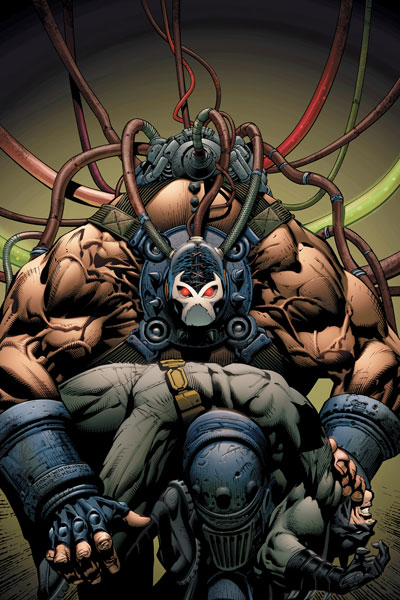
In Batman the Dark Knight Rises, Bane breaks Batman’s back over his knee. Batman however is not crippled for life, as he should be, and instead trains and rehabilitates himself back to fighting condition in order to face Bane once again. On the female side of this coin, Barbara Gordon, otherwise known as Batgirl, was shot by the Joker in the stomach, in order to drive Commissioner Gordon insane. The bullet went through her spine, paralysing her permanently.

Two very similar injuries, two very different stories. Batman’s injury happened in an active scene. Batman was fighting for his life, and for the good of Gotham, when the man he was fighting, broke his back. Barbara however, innocently opened the door, and became the victim of the Joker, in order to give Commissioner Gordon a larger story arc. Batman recovers, and Barbara remains paralyzed for life.

Luckily for Barbara, she is able to retrain herself in another skill; computer hacking and data manipulation. Her new skills allow Barbara to become Oracle, the great intellect and fighting partner of Black Canary. 
Female superheroes are able to hold their own in the comic book industry, so they aren’t being killed off because of lack of reader interest. This makes it ridiculous that the few females that do make an appearance in comic books meet their end more frequently, more violently, and with less justification than their male counterparts.

Fortunately Simone took her idea one step further, and began contacting comic book industry artists, publishers, and companies to raise awareness of the “Women in the Refrigerator” trope, and how women like herself were sick and tired of it. On her website today, you can see some of the many responses she has gotten from her letters, and most of which are positive.

In addition, as of November 2007, Gail Simone got a crack at the writing world of comics herself. Her Women in Refrigerators site brought attention to the problems of a male dominated industry writing for female superheroes; Simone was offered a job writing for wonder Woman. Not a stranger to comic book writing herself, Simone is responsible for writing hits such as the all-female super heroine crew Birds of Prey, and the ever wisecracking Deadpool.

The future is just within our grasp. A future with female superheroes just as strong, empowered, and death proof as their male counterparts. Making our world a safer place, one rescued gentleman in distress at a time.

(origin picture – the original “woman in the refrigerator”)


Emily Towsley, can be found either teasing her cat, or philosophizing with a customer over coffee in her second-life as a barista. Messages of support regarding her addiction to Netflix, and news of vintage teacup sales can be left on her twitter.(https://twitter.com/emtowsley) Her spare time is spent reading copious amounts of books, (https://www.goodreads.com/user/show/7246432-milie) or working on her latest blog. (http://spineonline.ca/emily-towsley/)
Related Posts Plugin for WordPress, Blogger...